White-labelAI integration
Your client asked for AI and your team does not build it. We design the workflow, ship the feature inside the product they already use, and prove it works before a customer ever sees it — under your agency name.
Terms
- Discipline
- AI Integrations
- Stack
- Claude · OpenAI · Python · Node.js · Next.js · PostgreSQL + pgvector · Webhooks
- Quote
- Written scope, fixed price, yours to mark up
- Credit
- Ships under your agency name
White-Label AI Integration & Automation, defined.
White-label AI integration means an agency can commit to an AI feature without hiring an AI team: a partner studio designs the workflow, builds it, and measures it before it reaches a customer. Blackbyrds Digital ships assistants grounded in a client’s own content, document extraction pipelines with confidence scoring and human review, classification and routing for inbound work, drafting and summarisation inside tools a team already opens every day, retrieval over private data, and the automation plumbing between systems. Cost per call, evaluation, guardrails, and a fallback for when the model is wrong are part of the build, not a later phase.
You sell. You manage the client. We build.
Background
The brief is usually “add a chatbot”. It is usually wrong.
Almost every AI request arrives as a solution rather than a problem. Somebody senior at the client has read that competitors are using AI, and the brief lands as a chatbot on the marketing site — the one place in the business where the questions are already answered by a contact form. Underneath that request there is normally something real and expensive: a support inbox nobody can keep up with, a shelf of PDFs that a person retypes into a system, applications sorted by hand into three piles, or a team writing the same reply forty times a week. Those are the workflows worth automating, and none of them look like a chat bubble in the corner of a homepage.
The engineering problem is that language models are probabilistic and the software around them has to behave anyway. A model that is right most of the time is a demo; a model that is right most of the time, knows when it is unsure, escalates to a person, refuses to answer outside its material, logs what it did, and costs a predictable amount per thousand calls is a product. That containment work — retrieval that grounds answers in the client’s own documents, an evaluation set that catches regressions, thresholds that route low-confidence output to a human queue, and instrumentation on cost and latency — is most of the build, and it is the part that decides whether your client is still using the feature in month six.
Why agencies bring us AI Integrations work.
The question is in the brief now, and “no” is expensive
AI has moved into RFPs, discovery calls, and board conversations at your clients. An agency that cannot answer the question either loses the project or refers it to somebody who then owns a relationship you built. Having a build partner turns a question you dread into a scoping conversation you can charge for.
Somebody has to talk the client out of the wrong thing
The most valuable early deliverable is often a smaller scope than the one requested. We are comfortable telling you, privately and with reasoning, that the workflow behind the request is worth automating and the chatbot on top of it is not. You decide how that lands with your client.
A prototype and a production feature are different projects
A convincing demo takes days, which is why expectations run ahead of reality. What follows is the unglamorous majority: permissions, edge cases, evaluation, cost control, retries, and the interface a person uses when the model gets it wrong. Agencies get hurt by quoting the demo and delivering the product.
The failure mode is reputational and it lands on you
A model that invents a refund policy, quotes a price that does not exist, or leaks one customer’s record into another customer’s answer becomes your agency’s problem within the hour. We build the refusal behaviour, the permission boundary, and the audit log first, because those are what keep a bad answer from becoming a bad week.
Hiring for this is a bet on a moving target
Model capabilities, pricing, and the surrounding tooling shift every few months. Carrying a permanent in-house specialist to absorb that churn only makes sense with a permanent pipeline of AI work. Most agencies have a queue that arrives in bursts, which is exactly what a partner is for.
What we deliver.
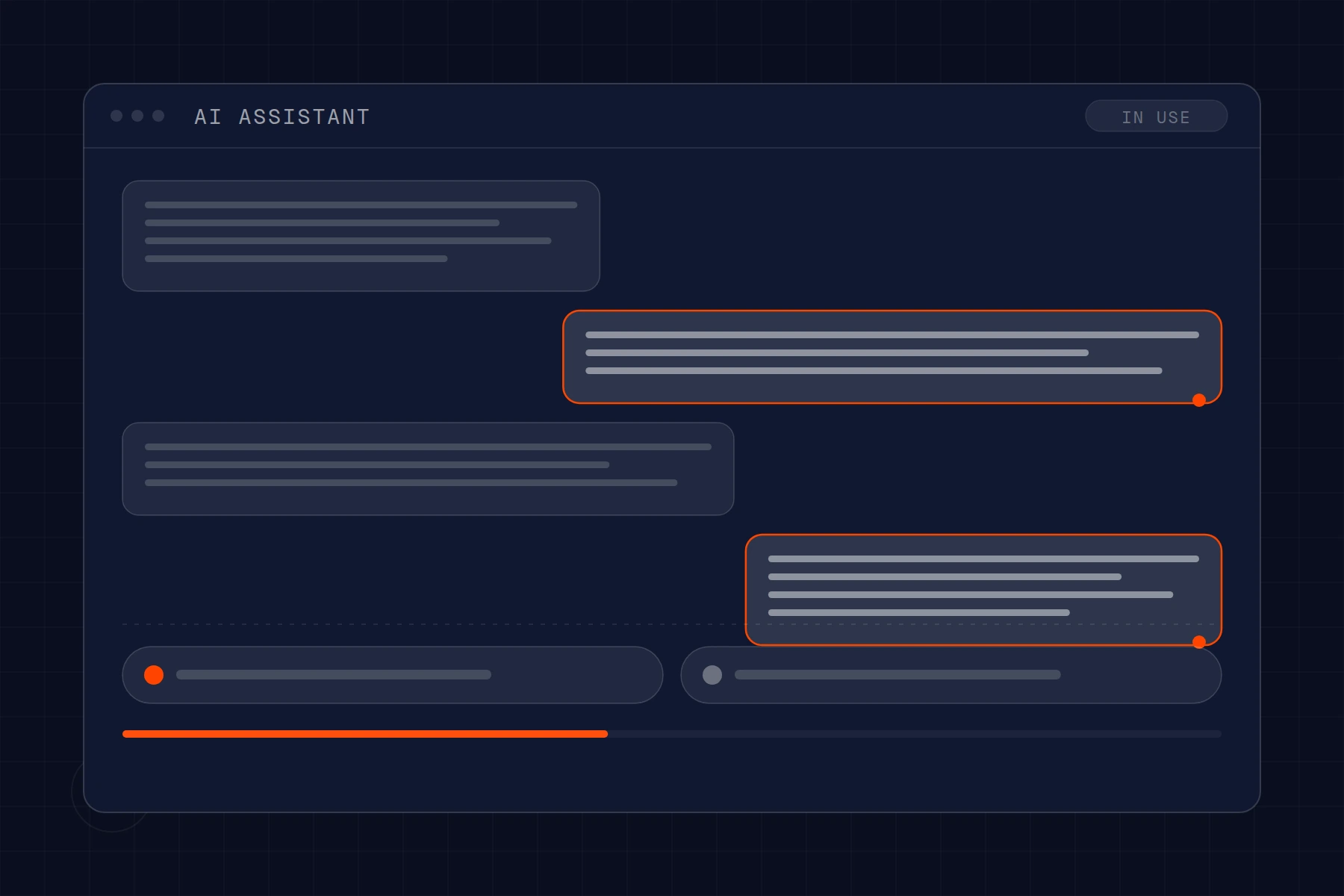
Assistants grounded in the client’s own material — help centre, policies, product data, past tickets — that answer from source and link back to it rather than improvising
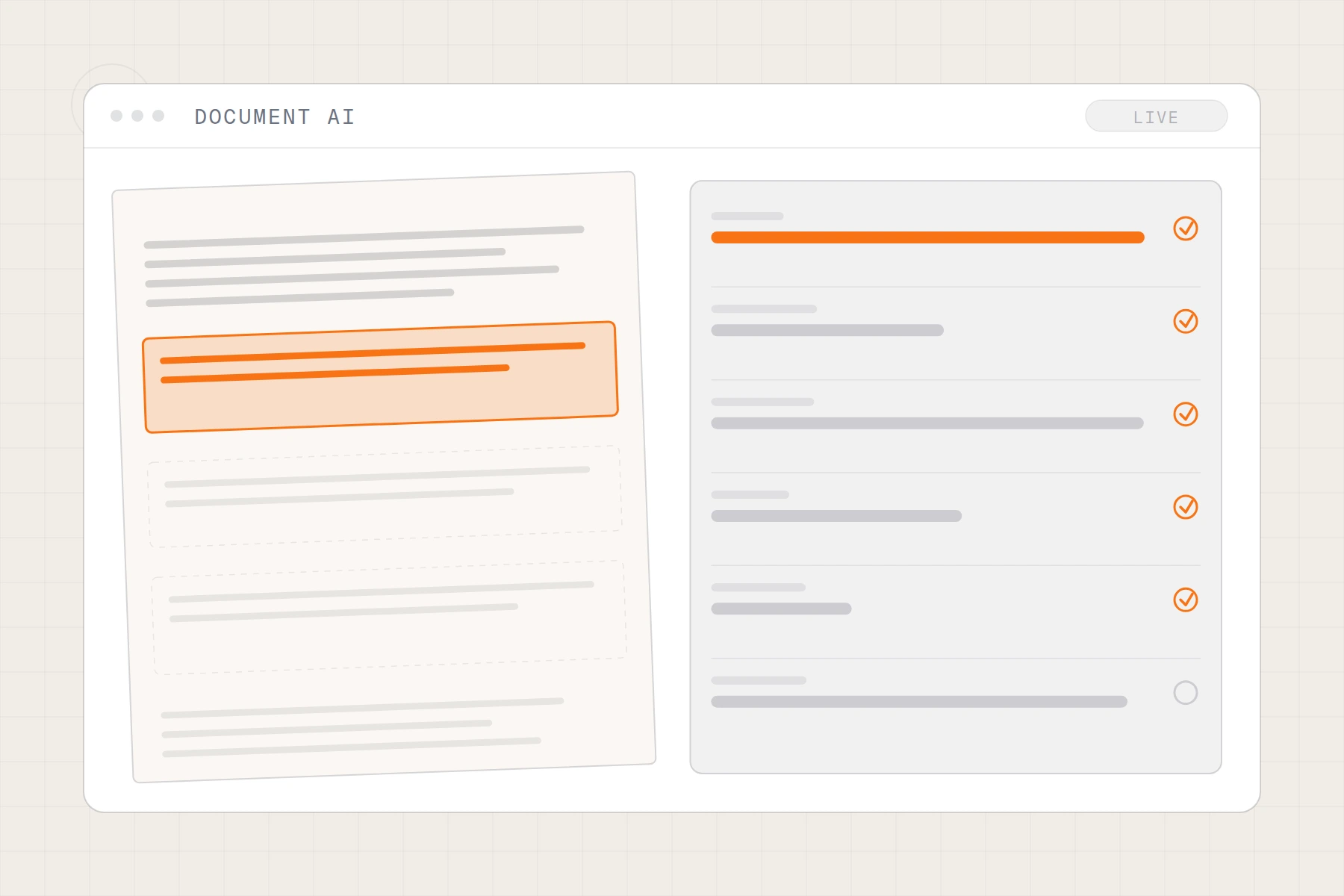
Document processing pipelines: intake, type classification, field extraction with per-field confidence, validation against business rules, and a review queue for anything below threshold
Classification and routing for inbound email, tickets, forms, and applications, with the reasoning attached so a human can audit the decision
Drafting and summarisation placed inside the tool the team already uses — CRM, helpdesk, admin panel — instead of a separate window nobody remembers to open
Search and retrieval over private content: chunking, embeddings, hybrid keyword and vector ranking, re-ranking, and permission-aware results
Automation plumbing between the systems the client already pays for, with retries, dead-letter handling, and alerting when a step silently fails
An evaluation set built from real examples, run before every release, so quality is a measurement rather than an impression
Guardrails and fallbacks: scope limits, refusal behaviour, escalation paths to a named person, and full logging of inputs and outputs
Cost, latency, and usage instrumentation per feature, so you can price a retainer against real numbers instead of a guess
The technical detail.
- Models
- Hosted APIs and open-weight models chosen per workload, with provider fallback and cost ceilings
- Retrieval
- Chunking strategy, embeddings, hybrid keyword and vector search, re-ranking, permission-aware results
- Documents
- OCR and layout parsing, field extraction with confidence scoring, business-rule validation, review queues
- Evaluation
- Test sets from real examples, regression runs before release, accuracy tracked per field and per intent
- Safety
- Scope and refusal design, PII handling, tenant isolation, human-in-the-loop checkpoints, audit logging
- Automation
- Event-driven and scheduled workflows, queues, webhooks, retries, dead-letter handling, failure alerting
- Integration
- CRM, helpdesk, ERP, and internal admin panels over REST and GraphQL; Next.js, Node, and Python services
- Operations
- Cost and latency instrumentation, usage reporting, staged rollout behind feature flags, prompt versioning
How we approach it.
- 01
You bring the project
Send us the brief, the designs, or just the client conversation so far. We work from whatever you have — a Figma file, a scope doc, or a half-formed idea you are still selling.
- 02
We scope and plan
You get a written scope, a technical approach, a timeline, and a fixed quote you can mark up before it reaches your client. If something in the brief will not work, we say so before you commit, not after.
- 03
We build behind the scenes
Development runs in your repo or ours, with progress you can show a client. We can stay invisible in email and calls, or join them under your brand. Your call, agreed up front.
- 04
You deliver it to your client
Handover is documented, deployed, and yours. The work ships under your agency name — we do not contact your client, pitch them, or appear in the credits unless you ask us to.
How the white-label part works.
The model provider account stays on your side
API keys can sit in your client’s account, in your agency’s, or in ours while we build. Usage-based provider costs are transparent either way, and we document exactly which service is billed for what so nobody discovers a surprise line item after launch.
Nothing in the product carries our name
No vendor badge, no “powered by” footer, no branded widget. System prompts, error copy, and escalation messages are written in your client’s voice, and we hand you a plain-language explanation of what the feature does and where its limits are that you can put your own logo on.
A measured pilot before the budget conversation
Where the outcome is genuinely uncertain, we scope a small paid evaluation against the client’s real data first. You get a written result — accuracy on the cases that matter, cost per run, what a full build would take — which is a far better instrument for selling the project than a promise.
Disclosure is your decision, not ours
Whether an end customer is told they are talking to an assistant is a positioning and compliance question for you and your client. We build for either answer, and we flag where a regulator, a platform policy, or plain fairness makes disclosure the safer route.
When agencies call us in.
The support queue that never gets shorter
The same forty questions, answered by people who have better things to do. An assistant grounded in the client’s documented answers handles the repetitive share, hands over cleanly with full context when it cannot, and gives the team a record of what it could not resolve.
The pile of documents somebody retypes
Invoices, applications, delivery notes, insurance forms, statements. Extraction with confidence scoring commits the clean cases and routes the ambiguous ones to a person with the fields already filled in — which is faster than typing and easier to audit than trusting.
The inbox that gets sorted by hand
Enquiries, complaints, claims, and applications triaged into categories, priorities, and owners. The value is rarely the classification itself; it is that the urgent thing stops sitting behind sixty routine items for a day and a half.
The blank page inside an internal tool
Proposals, replies, case notes, and summaries drafted where the work already happens, from data the system already holds. A person edits and sends. The measurable win is time to first draft, and it is easy to demonstrate to a sceptical client.
The archive nobody can search
Years of documents, tickets, or research that a keyword box has never made usable. Retrieval over the client’s own corpus, respecting who is allowed to see what, so an answer arrives with citations to the source instead of a folder path.
More white-label
Other disciplines we deliver.
Not an agency? The same team delivers this work directly under our own name. AI Agents & Automation
AI Integrations FAQ
Questions agencies ask first.
Our client wants a chatbot. Will you just build it?
We will, once we know what question it is meant to answer. The first thing we do is ask where the cost actually sits — support volume, manual processing, response time — because that is usually somewhere other than the homepage. If a chat interface is genuinely the right surface after that conversation, we build it properly and say so. If it is not, you get a written alternative you can take to your client as your own recommendation.
What do we get at handover?
The repository with its full commit history, the prompt and configuration files, the evaluation sets, the retrieval index definitions, and the documentation needed to run and re-tune it. Client data stays in accounts that you or your client control, and we work as invited collaborators who can be removed the day the engagement ends. Commercial terms, including anything to do with rights in the code, are agreed per partnership before work starts rather than assumed from a web page.
What happens when the model gets something wrong in front of a customer?
That case is designed before the happy path. Confidence thresholds route uncertain output to a person, scope limits make the assistant decline questions outside its material rather than improvise, every interaction is logged so a bad answer can be traced and reproduced, and anything customer-facing keeps a human review step where the cost of being wrong justifies it. We will not ship a feature whose failure mode is an apology.
Can you give us an accuracy figure before we quote the client?
Not an honest one, and any number quoted before testing on the client’s own data is decoration. What we can do is run a short paid evaluation against real examples and give you a measured result for the specific task — which cases pass, which fail, and what the failures have in common. That is a number you can defend in a room, unlike a benchmark from someone else’s dataset.
We already have developers. Can you take only the AI part?
Yes, and it is a common arrangement. We build the pipeline or the assistant as a service with a documented interface your team calls, review pull requests together where the work touches their codebase, and keep the boundary explicit so nobody is waiting on the other. Your developers stay the owners of the product; we own the part they do not want to specialise in.
How do you price AI work, and what about ongoing model costs?
Discovery is a short paid phase that ends in a written scope and a fixed build quote you can mark up. Provider usage is separate and metered — we instrument cost per call during the build so you can set a retainer price with the running cost known rather than estimated, and we tune model choice, caching, and prompt size when that number is higher than the feature is worth.
What do you refuse to build?
Autonomous agents that take irreversible actions — moving money, sending contracts, deleting records — without a person confirming. Systems that make employment, credit, medical, or legal determinations without a qualified human decision-maker in the loop. And any feature that depends on the model being right every time, because none of them are. We will say all of this before you commit the client, not after.
AI Integrations delivered under your brand.
Send the brief, the designs, or the client conversation so far. You get a written scope, a technical approach, and a fixed quote you can mark up.