Lumen Neobank Mobile Banking Redesign
An Australian challenger bank rebuilt onboarding and home for a 24-point lift in app-store rating.
At a glance · Fintech · 2026
What Blackbyrds Digital built, and what changed
Blackbyrds Digital redesigned the onboarding and home experience for an Australian challenger bank serving 380,000 retail customers. Headline result: +24 pts (app-store rating).
Published
- Discovery
- 22 Moderated Sessions
- Support Theme Analysis
- Drop-off Analytics
The challenge
Before
Lumen is an Australian challenger bank with 380,000 retail customers and an app-store rating that had been drifting downward for three quarters in a row, ending in the high 3s. Onboarding completion was below 38%, and the home screen had grown into a feature dump that prioritized the bank's products rather than the customer's next likely action. Customer support ticket themes pointed clearly at confusion in the first-time experience and difficulty completing routine tasks like transferring money or finding the BSB code.
- App-store rating drifting downward across three quarters into the high 3s
- Onboarding completion below 38% with drop-off concentrated at ID verification
- Home screen designed around bank products, not customer next-actions
- Routine tasks like BSB code retrieval requiring three to four taps
- Support tickets dominated by first-time-experience confusion
- Information architecture built around internal product teams, not user mental models
- Accessibility audit findings ignored across two releases
- Inconsistent component usage across screens hurting visual coherence
- App-store rating drifting downward across…
- Onboarding completion below 38% with…
- Home screen designed around bank products,…
- Routine tasks like BSB code retrieval…
- Support tickets dominated by…
- Information architecture built around…
The solution
What we built
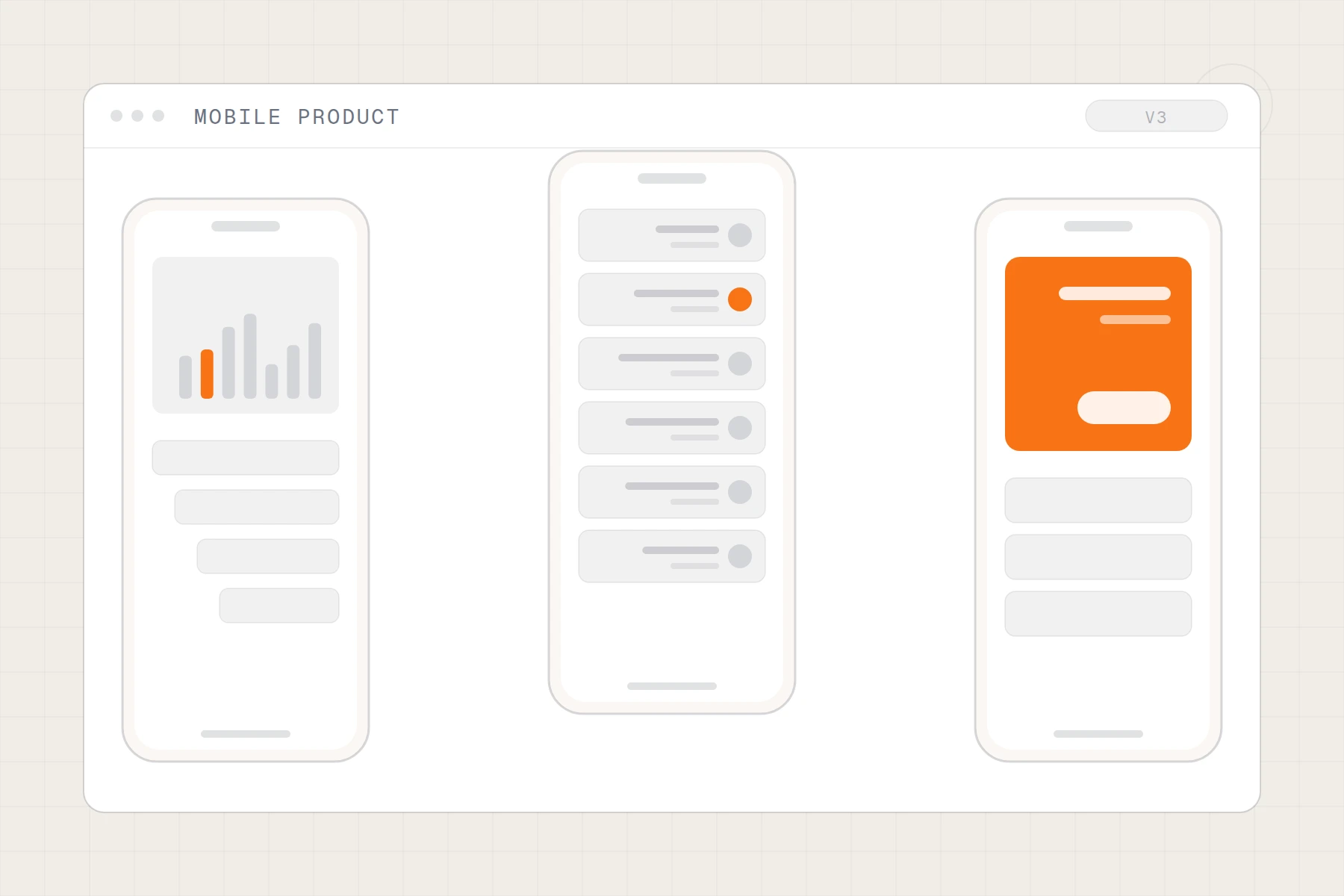
We rebuilt onboarding and the home experience from research outward. We ran moderated sessions with 22 prospective and existing customers across age bands, interviewed support team members about ticket themes, and pulled drop-off analytics from the existing flows. Onboarding was restructured into a progressive disclosure model where ID verification — the largest historical drop-off point — is broken into clearer steps with explicit progress signal and an option to save and resume. The home screen was redesigned around the customer's top five frequent actions surfaced by analytics, with bank products discoverable but not dominant. The information architecture was rebuilt around customer mental models (Spending, Saving, Borrowing, Profile) rather than internal product teams. Component usage was unified into a refreshed design system. Accessibility was treated as a baseline, not a feature — every component meets WCAG AA, and screen-reader behavior was tested with users who actually use screen readers.
How the system flows
- Discovery22 Moderated SessionsSupport Theme AnalysisDrop-off Analytics
- Onboarding RestructuredProgressive DisclosureSave and Resume
- Home RedesignTop Five ActionsProducts Discoverable Not Dominant
- Information ArchitectureCustomer Mental ModelsSpending/Saving/Borrowing
- Design System RefreshUnified ComponentsToken-based Theming
- Accessibility BaselineWCAG AAScreen-reader Tested with Users
- Staged Rollout5% / 20% / 100%Cohort Analytics
- Support team feedback loop captured during pilot phase
- Design tokens shared with engineering for one-source-of-truth styling
- Quantitative success criteria committed before design started
App rating drifting and onboarding leaking?
We design fintech experiences against quantitative success criteria you commit to before the work starts — not after the launch.
No retainer lock-in · Month-to-month · Full transparency