Atlas Freight Brokerage
A mid-market freight brokerage replaced the first two hours of every broker's day with an AI agent that parses, matches, and confirms loads automatically.
At a glance · Logistics · 2026
What Blackbyrds Digital built, and what changed
Blackbyrds Digital shipped a 4-week Business Automation Package for a 25-broker freight brokerage — tripling daily loads per broker and scaling from 800 to 2,400 monthly loads with zero new hires. Headline result: 3x (loads per broker per day).
Published · Updated
- Loads per broker per day
- Time to carrier…
- Monthly loads, zero new…
The challenge
Before
Atlas Freight Brokerage had 25 brokers, every one of them losing the first two hours of the working day to the same grind: reading inbound shipment quote emails, hand-matching them against carrier capacity in the CRM, and then phoning carriers one by one to confirm. The business was healthy but capped by friction work that didn't scale. Leadership had been quoted a six-figure rip-and-replace by a TMS vendor and wasn't convinced — they wanted their existing dispatch software kept, and a focused automation built on top of it.
- Brokers losing the first 2 hours of every day to manual quote matching
- Inbound shipment requests parsed by eye from email and PDF
- Carrier capacity matched manually against CRM records
- Confirmation calls placed one carrier at a time by phone
- Time-to-confirmation averaging 90 minutes per load
- Volume capped at ~800 monthly loads with the current headcount
- TMS vendor quoting a six-figure rip-and-replace as the only path forward
- No appetite to replace existing dispatch software — too much process embedded in it
- Brokers losing the first 2 hours of every…
- Inbound shipment requests parsed by eye…
- Carrier capacity matched manually against…
- Confirmation calls placed one carrier at a…
- Time-to-confirmation averaging 90 minutes…
- Volume capped at ~800 monthly loads with…
The solution
What we built
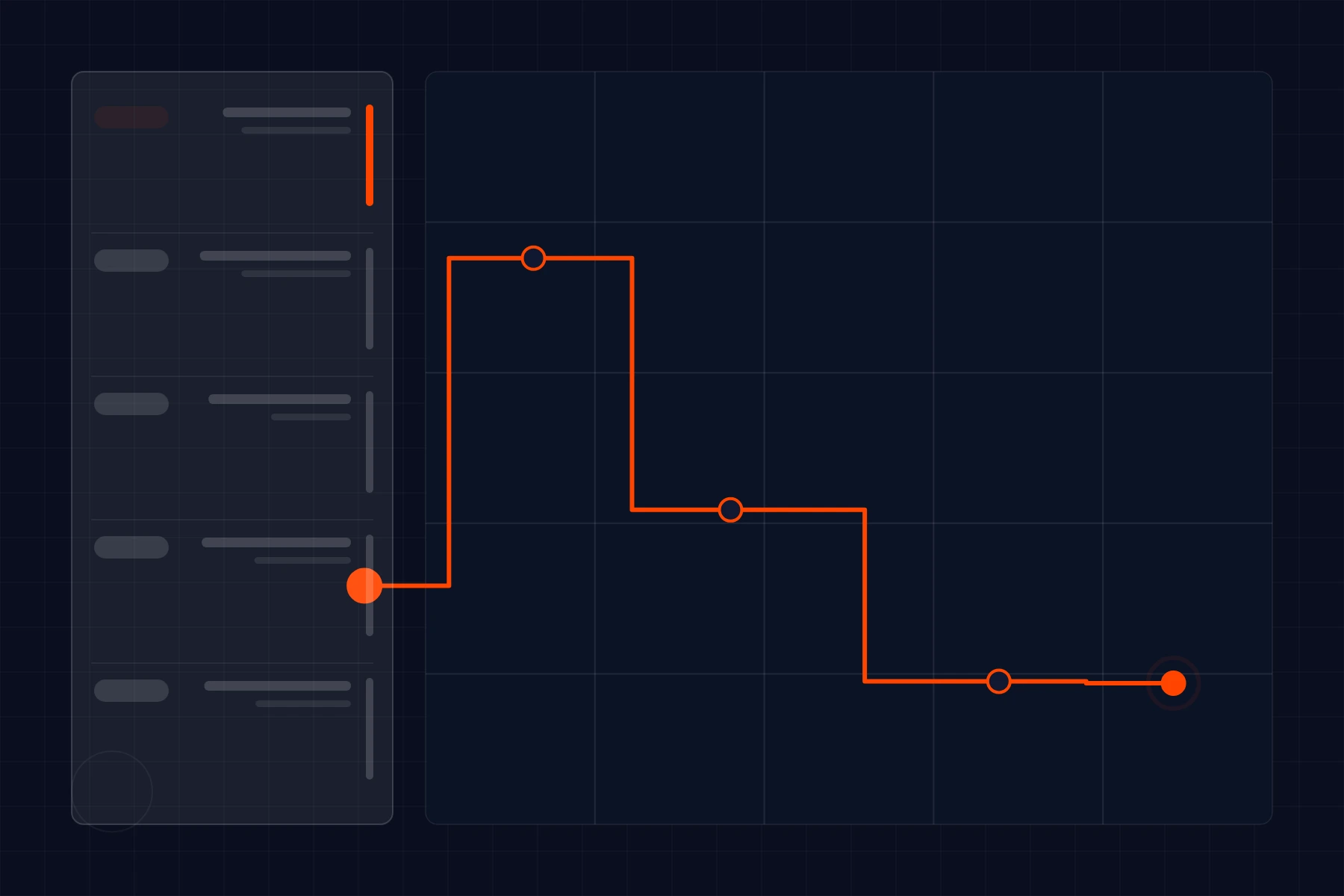
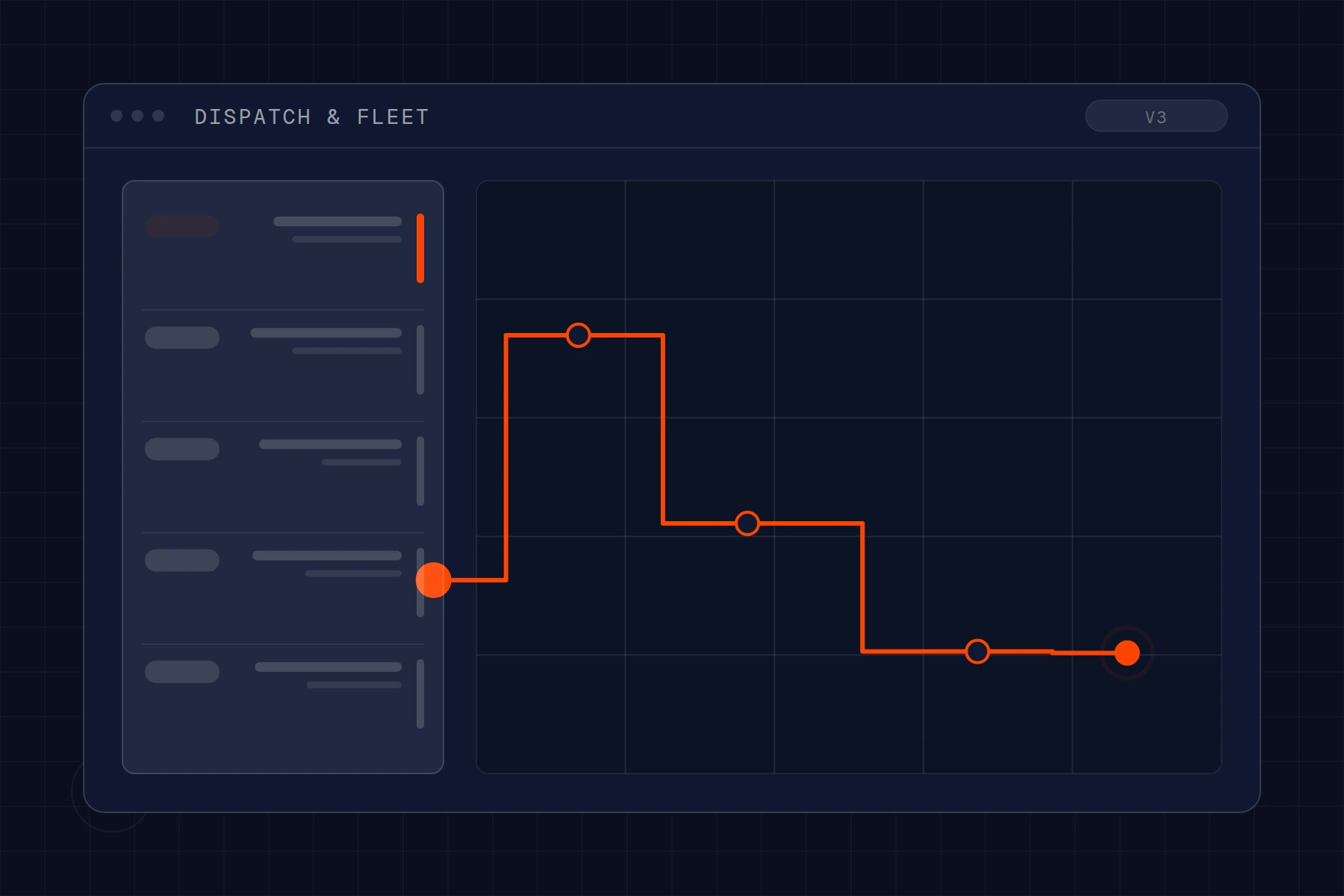
We ran our 4-week Business Automation Package. Week one we co-decided the scope: quote-to-load matching, end to end, built on top of their existing dispatch software rather than replacing it. The agent: (1) parses inbound shipment requests directly from email — origin, destination, weight, equipment type, target rate, (2) matches against active carrier capacity in their CRM using their existing lane and rate logic, (3) auto-sends confirmation requests to the top 3 matched carriers in parallel, and (4) updates the broker dashboard live as carriers respond. Brokers stop being parsers and start being closers — they pick up at the "who do I award this load to" stage, not the data-entry stage. Friday demos, 30-day post-launch tuning.
How the system flows
- Inbound shipment emailAI agent extracts origin, destination, equipment, rate
- Parsed requestmatched against carrier capacity in existing CRM
- Carrier responseslive dashboard update with status per load
- Broker takes over at award stageno data entry required
- Exceptions (no capacity / rate mismatch)routed to senior broker queue
- 30-day post-launch tuninglane logic and rate thresholds refined per broker feedback
- Top 3 carriers selected by lane history, rate, and current capacity
- Confirmation requests sent in parallel via email + SMS
Brokers spending hours on parsing instead of closing?
Our 4-week Business Automation Package ships one production AI workflow inside your existing dispatch software — fixed scope, weekly demos, no rip-and-replace.
No retainer lock-in · Month-to-month · Full transparency